
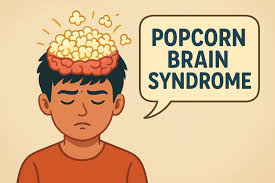

In today’s fast-paced digital world, smartphones, social media, online gaming, short videos, and constant notifications have become an integral part of daily life. While technology offers numerous benefits, excessive exposure to rapid digital stimulation can affect the brain’s ability to focus and concentrate. One emerging concept that describes this phenomenon is “Popcorn Brain.” Although not a medical diagnosis, it is increasingly recognized as a modern psychological and behavioural concern, particularly among children, adolescents, and young adults.
Meaning of Popcorn Brain
The term Popcorn Brain was coined by researcher David Levy in 2011 to describe a condition in which the brain becomes accustomed to the constant stimulation provided by digital technology. Similar to popcorn kernels rapidly popping in a heated pan, thoughts continuously jump from one stimulus to another, making it difficult to maintain attention on slower-paced activities.
Individuals with popcorn brain often find traditional tasks such as reading books, attending lectures, studying, or engaging in face-to-face conversations less stimulating compared to scrolling through social media feeds or watching short-form videos. As a result, their attention span may gradually decrease, leading to difficulties in concentration and productivity.
Magnitude of the Problem
The prevalence of popcorn brain is increasing worldwide due to the widespread use of digital devices.
According to recent reports:
- Many adolescents spend more than 6–8 hours daily on screens outside academic activities.
- Social media platforms, online gaming, and video-sharing applications are designed to provide instant gratification and continuous stimulation.
- Children are being exposed to smartphones and tablets at increasingly younger ages.
- Studies indicate that excessive screen time is associated with reduced attention span, sleep disturbances, anxiety, and academic difficulties.
The World Health Organization and child development experts have expressed concerns regarding prolonged screen exposure among children and adolescents. As digital technology becomes more integrated into daily life, the risk of developing symptoms associated with popcorn brain continues to grow.
Causes of Popcorn Brain
Several factors contribute to the development of popcorn brain.
1. Excessive Screen Time
Spending prolonged hours on smartphones, tablets, computers, and television exposes the brain to continuous stimulation. Frequent switching between apps, videos, and notifications trains the brain to seek constant novelty.
2. Social Media Addiction
Social media platforms provide endless streams of content, likes, comments, and notifications. These features activate the brain’s reward system and encourage repetitive checking behaviors.
3. Short-Form Digital Content
Platforms offering short videos and quick entertainment deliver instant rewards within seconds. Over time, the brain may become less tolerant of activities that require patience and sustained attention.
4. Multitasking
Many individuals simultaneously browse the internet, chat with friends, watch videos, and complete academic or work-related tasks. Constant task switching reduces the brain’s ability to focus deeply on one activity.
5. Online Gaming
Fast-paced games require rapid responses and provide immediate rewards. Excessive gaming can make ordinary activities appear slow and uninteresting.
6. Constant Notifications
Frequent alerts from emails, messaging applications, and social media interrupt concentration and create a habit of continuously checking devices.
7. Fear of Missing Out (FOMO)
Many people feel compelled to remain constantly connected to avoid missing important updates or social interactions. This behavior promotes excessive device usage and distraction.
Symptoms of Popcorn Brain
Individuals experiencing popcorn brain may exhibit several cognitive, emotional, and behavioral symptoms.
Cognitive Symptoms
- Difficulty concentrating on tasks
- Reduced attention span
- Frequent distraction
- Poor memory retention
- Difficulty completing long-term projects
- Trouble reading lengthy texts or books
Emotional Symptoms
- Irritability when unable to access digital devices
- Restlessness during quiet activities
- Increased anxiety
- Feelings of boredom when not using technology
- Reduced patience
Behavioral Symptoms
- Constant checking of smartphones
- Excessive social media use
- Difficulty engaging in face-to-face conversations
- Habitual multitasking
- Procrastination
- Reduced productivity
Academic and Professional Effects
Students and professionals with popcorn brain may experience:
- Poor academic performance
- Reduced learning efficiency
- Incomplete assignments
- Lower workplace productivity
- Increased mistakes due to lack of attention
Impact on Health and Well-being
Popcorn brain can affect various aspects of physical and mental health.
Sleep Problems
Exposure to screens, particularly before bedtime, can interfere with melatonin production and disrupt sleep patterns. Poor sleep further impairs concentration and memory.
Mental Health Concerns
Excessive digital stimulation has been associated with stress, anxiety, emotional instability, and reduced psychological well-being.
Social Difficulties
Individuals may spend less time interacting with family and friends in person, affecting communication skills and social relationships.
Reduced Creativity
Constant consumption of digital content leaves less opportunity for reflection, imagination, and creative thinking.
Decreased Productivity
Frequent interruptions and distractions reduce efficiency and increase the time needed to complete tasks.
Management of Popcorn Brain
Fortunately, popcorn brain is not permanent. Several strategies can help restore healthy attention and concentration.
1. Digital Detox
Taking regular breaks from digital devices helps the brain reset and reduce dependence on constant stimulation.
2. Set Screen Time Limits
Establish daily limits for recreational screen use. Many smartphones now provide screen-time monitoring features.
3. Practice Mindfulness
Mindfulness meditation improves attention control and helps individuals remain focused on the present moment.
4. Engage in Deep Work
Dedicate uninterrupted periods to studying, reading, writing, or other important tasks without digital distractions.
5. Turn Off Notifications
Disabling unnecessary notifications reduces interruptions and supports sustained concentration.
6. Read Physical Books
Reading printed books encourages longer periods of focused attention and strengthens cognitive endurance.
7. Exercise Regularly
Physical activity improves blood flow to the brain, enhances concentration, and reduces stress.
8. Improve Sleep Habits
Avoid screen use at least one hour before bedtime and maintain a regular sleep schedule.
9. Encourage Face-to-Face Interaction
Spending time with family, friends, and colleagues helps strengthen communication skills and social connections.
10. Develop Hobbies
Activities such as painting, gardening, music, sports, and crafts provide meaningful alternatives to excessive screen use.
Prevention of Popcorn Brain
Prevention is more effective than treatment. The following measures can reduce the risk of developing popcorn brain:
For Individuals
- Use technology purposefully rather than habitually.
- Schedule device-free periods each day.
- Avoid excessive multitasking.
- Practice mindfulness and relaxation techniques.
- Engage in outdoor activities regularly.
For Parents
- Monitor children’s screen time.
- Establish technology-free family periods.
- Encourage reading and physical play.
- Model healthy digital habits.
- Keep devices out of bedrooms during sleep hours.
For Schools
- Promote digital literacy education.
- Encourage classroom activities that require sustained attention.
- Incorporate physical activity and mindfulness programs.
- Educate students about healthy technology use.
For Workplaces
- Encourage focused work sessions.
- Minimize unnecessary digital interruptions.
- Promote employee well-being programs.
Conclusion
Popcorn brain is a growing concern in the digital era, characterized by reduced attention span and difficulty focusing due to excessive exposure to rapidly changing digital stimuli. Although it is not a formal medical diagnosis, its effects on concentration, learning, productivity, sleep, and mental health are increasingly evident. With rising dependence on smartphones, social media, and online entertainment, awareness of popcorn brain has become essential. Adopting healthy digital habits, limiting screen time, practicing mindfulness, engaging in physical activity, and promoting balanced technology use can help prevent and manage this modern challenge. By using technology wisely rather than excessively, individuals can maintain cognitive health, improve focus, and enhance overall well-being.

Prof. SUBRAHMANYA NAYAK
Principal,
Department of Mental Health Nursing,
New Mangala College of Nursing,
Vidyanagar, Pedamale Post,
Neermarga, Mangaluru – 575029
Ph: 9964677188
Visit Us: https://mangalacollege.org/









1 comment
thanks for info.