


Just as the Bard of Avon, William Shakespeare quipped, “What’s in a name? A rose by any other name would smell as sweet,” we, the lesser mortals would want to ask, “What’s in grammar? A sentence without grammatical correctness would appeal as much as a grammatically appropriate one.”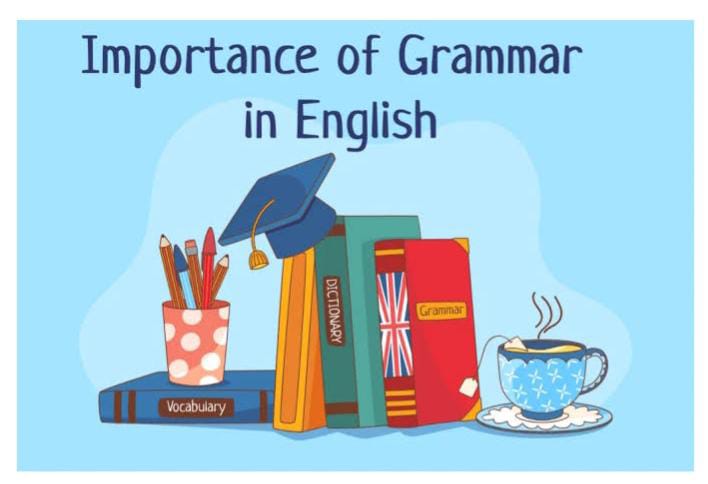
My heart fluttered fast when a student looked at me on my birthday and averred, “You looks nice ma’am.” I didn’t feel the desire to correct her as I felt happy that I looked nice and happier that someone took the trouble of complimenting me. I didn’t want to spoil the sweetness of the moment by focusing on grammar and forcing her to say, “You look nice ma’am.”
I further add that grammar spelt as grammer leaves no scope for confusion, and would be understood as grammar, despite the error in spelling. My daughter’s caution, when she hadn’t yet started schooling, to my neighbour’s son, who was precariously positioned on the compound wall, “Fall downing Watson, fall downing,” was understood perfectly well by the boy and the rest of us. While we burst into bouts of laughter, the boy carefully climbed down.
Such instances raise the question, “Is grammar important? Is it even relevant?”
My answer to the question is a resounding ‘Yes’.
Let’s get it straight. Do we pose similar questions with regard to other languages? Do we argue in the same manner about our vernacular languages? We certainly don’t because our own language poses no challenge to us and grammatical correctness is not frowned upon. Our native tongue finds English esoteric. It is not a language that is unconsciously caught. It
seems to be a language of the elite, and colonial hang over further compounds the problem. There is an unnecessary sense of shame when one is unable to speak the language properly, yet paradoxically, there is also an inexplicable reluctance to use the language more and more in order to improve oneself.
In such a scenario, I want to declare that since there is no escape from English, it would be healthy to speak the English language, taking maximum care to avoid mistakes. But how can we avoid mistakes?
My first bit of advice to every aspirant who wants to ace English is to speak the language, seizing every opportunity that comes his/her way. There is no miraculous capsule to be swallowed. There is no magical abracadabra. There is only one mantra, only one success
formula:
Read extensively, listen intently, write appropriately, enjoy peripheral learning
and speak in English when the situation demands the use of it.
Caveat…
He goes to work by the train☹️ He goes to work by train????









9 comments
Good one Malini ma’am..looking forward to more such articles ????
Warm thanks Vidya… You have encouraged me to verbalise my thoughts…
The importance of grammar in this article is so well highlighted. A simple punctuation can change a whole sentence..so grammar is needed to understand a sentence. Although it is said as long as the person understands what one is trying to say …the same when written or spoken does change the way it’s heard with grammatical errors. This was indeed a delight to read and so much to learn.
Good job.
Thank you dear Anuradha… You have made a pertinent observation about the importance of punctuation…
A simple punctuation changes a whole sentence. That’s why it is said grammar is important. This article indeed highlights the importance of grammar and was truly a delight to read.
Yes, indeed…
Importance of Grammar is beautifully explained in this article . Loved reading it. Looking forward to more .
Glad & grateful…
Grateful thanks…